 The SMH meeting offered a very well-balanced programme combining an up-to-date scientific focus with important topics of relevance to the Society and its future activities.
The very well attended scientific morning session was particularly successful in its structure and thematic continuity. The individual presentations complemented each other very well and moved seamlessly from clinical aspects of FLT3-mutated AML to bioinformatic challenges of FLT3-ITD detection. This created a coherent and highly topical overview of a rapidly evolving field in molecular hematology.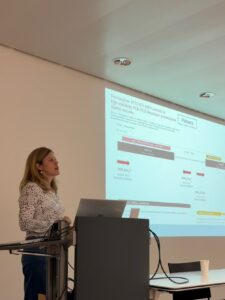
The session opened with a very comprehensive and up to date talk from Corinne Widmer on the clinical treatment and relevance of FLT3-ITD and other FLT3 mutations. Josefin Ahmann subsequently provided an insightful and technically focused overview of FLT3-ITD as an MRD marker, highlighting its increasing relevan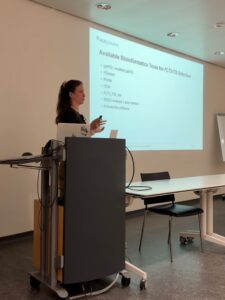 ce in modern AML management. This was followed by an illustrative case presentation by Britta Hartmann, which translated the preceding concepts into clinical practice and stimulated an engaging discussion among the participants. Vanessa Roch concluded the scientific session with a well structured and researched presentation on bioinformatic pipelines for FLT3-ITD MRD analysis, including analytical sensitivity, methodological differences, and current technical challenges. Taken together, the four contributions provided a broad yet well-integrated perspective ranging from treatment decisions to highly specialized molecular diagnostics in the important and fast developing field of FLT3 in AML.
The afternoon was dedicated to recurrent topics and current developments within the Society. Discussions included updates on the revision of the IVDR framework at the European level, external quality assessment and interlaboratory exchange, as well as the harmonization of NGS reporting. Current FAMH-related topics were also addressed, including the harmonization of the NGS certificate, and the timeline for recognition as an FAMH training center.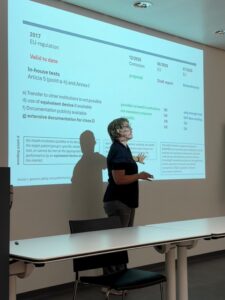
Further organisational and strategic topics included the duration of storage of biological samples, planning of the next journal club and technicians’ meeting, and the upcoming election of board members in autumn 2027.
Importantly, the meeting acknowledged several topics requiring more structured follow-up at Society level. In particular, the harmonization of the NGS reporting and recommendations concerning the storage of biological samples were recognized as areas of high relevance for the community. Dedicated working groups will therefore take these topics forward, with the aim of developing practical guidance, consensus recommendations, and, where appropriate, formal Society guidelines.
Overall, the meeting combined a scientifically strong and highly coherent morning session with a productive afternoon focused on harmonization, quality, education, and future Society activities.
We would like to thank all participants for their active contributions and lively discussions and are already looking forward to our next meetings, in particular the upcoming Technicians’ Meeting in Bern on 26 January 2027. So save the date!